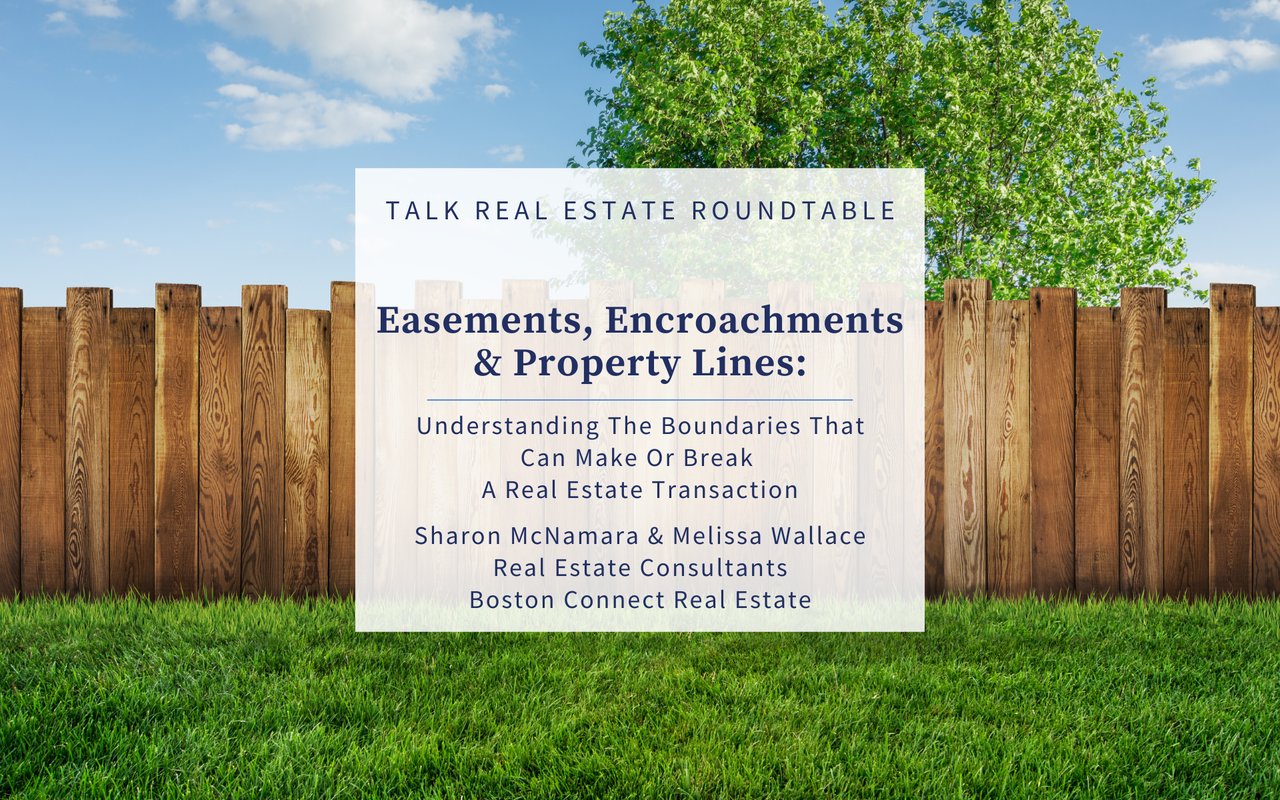
Easements, Encroachments & Property Lines: Understanding The Boundaries That Can Make Or Break A Real Estate Transaction
When buying or selling a home, most people focus on the obvious details price, location, square footage, number of bedrooms, and recent updates.
But one of the most overlooked aspects of real estate has nothing to do with what's inside the home.
It has everything to do with the land.
Property lines, easements, and encroachments can affect how you use your property, what you can build, your relationship with neighbors, and even whether your transaction closes smoothly.
At Boston Connect Real Estate, we've seen these issues arise in everything from first-time home purchases to long-time family homes. Understanding them before you buy or before you list your home for sale can save you significant stress later.
Let's break down what every homeowner should know.
What Are Property Lines?
Property lines are the legal boundaries that define where your land begins and ends.
While this may seem straightforward, many homeowners are surprised to learn that what they think are their property lines may not actually be correct.
Just because:
- A lawn is mowed a certain way
- A tree line separates two yards
- A stone wall has existed for decades
- A fence has always been there
. . . doesn't necessarily mean that's where the legal boundary exists.
The only way to know with certainty is through legal records and, when necessary, a professional land survey.
Why Property Lines Matter
Knowing your property lines becomes especially important if you're planning to:
- Install a fence
- Build a garage or shed
- Add an addition
- Install a swimming pool
- Build a deck
- Install a septic system or well
- Remove large trees
- Sell your property
Building even a few feet onto someone else's property can create expensive problems that may need to be resolved before closing.
Don't Assume the Fence Marks the Boundary
One of the biggest misconceptions homeowners have is believing that the existing fence marks the property line.
In reality, many fences were installed years or even decades ago without a formal survey.
Sometimes homeowners simply replaced an existing fence, assuming it was in the correct location.
Unfortunately, that assumption isn't always correct.
During one recent transaction, a survey revealed that a neighbor's fence extended approximately five feet onto the property being purchased.
Neither homeowner realized there was an issue because the fence had existed for years.
Situations like this are more common than many people realize.
What Is an Encroachment?
An encroachment occurs when a structure or improvement extends onto another person's property.
Common examples include:
- Fences
- Driveways
- Sheds
- Retaining walls
- Decks
- Landscaping
- Utility structures
Sometimes these encroachments are minor and have existed peacefully for decades.
Other times, they can delay a real estate transaction or require legal agreements before closing.
Every situation is unique, which is why buyers should perform proper due diligence before purchasing a property.
What Is an Easement?
An easement is a legal right that allows another individual, company, or government entity to use a portion of your property for a specific purpose even though you still own the land.
Many homeowners are surprised to learn their property contains an easement.
In fact, many never notice one because it rarely affects their day-to-day lives.
Common types of easements include:
Utility Easements
These allow utility companies access to maintain or repair underground or overhead infrastructure such as:
- Water lines
- Sewer lines
- Gas lines
- Electric service
- Telephone or internet lines
Utility companies don't simply enter your property whenever they want. These easements exist so they can access infrastructure if maintenance or emergency repairs become necessary.
Drainage Easements
These protect stormwater management systems, drainage areas, retention ponds, or detention basins that help prevent flooding.
Driveway Easements
Sometimes neighboring properties share access through one driveway.
In these cases, one property owner may legally have the right to cross another owner's land to reach their home.
Access Easements
Some parcels require access across another property because they don't have direct frontage on a public road.
These legal rights are typically recorded with the property's title.
Can Easements Be Removed?
In some situations, yes.
An easement may become abandoned or legally terminated if the original purpose no longer exists.
For example, during one recent transaction, an older recorded driveway easement had never actually been used because the neighboring property was ultimately developed differently than originally planned.
Although the easement remained in historical records, it had effectively been abandoned.
Determining whether an easement still exists or remains enforceable should always involve a qualified real estate attorney.
Why Surveys Matter
A professional land survey provides far more than property dimensions.
A survey can identify:
- Property corners
- Boundary lines
- Easements
- Existing improvements
- Encroachments
- Lot dimensions
If you're making improvements to your property or purchasing a home where boundaries may be unclear a survey can provide valuable peace of mind.
The Importance of Title Insurance
Title insurance is one of the most valuable protections a homebuyer can purchase.
Many buyers hope they'll never need it.
Fortunately, most never do.
But if an issue involving ownership rights, easements, encroachments, or recorded property interests arises after closing, title insurance may provide important protection.
Considering that purchasing a home is one of the largest financial investments most people will ever make, title insurance offers security that many homeowners appreciate having.
Disclosure Matters
When selling a home, transparency is essential.
Known easements, shared driveways, boundary questions, or encroachments should be discussed with your real estate professional and closing attorney early in the transaction.
Addressing these matters upfront helps:
- Avoid surprises during closing
- Reduce delays
- Build buyer confidence
- Protect everyone involved in the transaction
Every property is unique, and disclosure requirements can vary depending on the circumstances.
Neighbor Relationships Matter Too
Boundary issues don't always become legal disputes.
In many cases, neighbors work together to resolve concerns respectfully.
Open communication can often prevent misunderstandings before they become larger problems.
However, documenting agreements and consulting legal professionals when necessary helps protect both parties for the future.
Final Thoughts
Understanding your property's legal boundaries is just as important as understanding the home itself.
Whether you're purchasing your first home, selling a property you've owned for decades, or planning future improvements, taking the time to understand property lines, easements, and encroachments can help you avoid costly surprises.
At Boston Connect Real Estate, we believe educated buyers and sellers make confident decisions. Our team works closely with experienced real estate attorneys, surveyors, lenders, and title professionals to help guide clients through every step of the process.
Because every move should be a moving experience.
Thinking about buying or selling a home? Contact Boston Connect Real Estate today. We'll help you understand every aspect of your property from the front door to the property lines and guide you confidently through your next move.
Watch our live video on Youtube!